Monday, 20 April 2015

Sylva by Snarky Puppy and the Metropole Orkest - First Impressions

After having some major problems with the last album from groundUP Records(Swift by Bill Laurance), I’m happy to report that Sylva, the latest endeavour from Michael League, Snarky Puppy and the Metropole Orkest, has restored my faith in the jazz fusion collective.
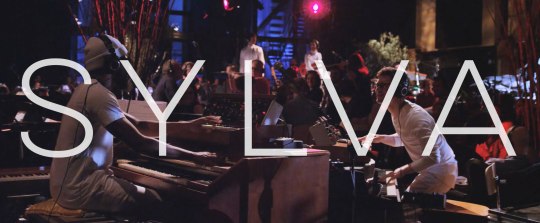


My biggest concern going into this album was that the use of the orchestra was going to feel gimmicky and tacked-on to give the album an interesting selling point, but nothing more. Thankfully, the orchestra and the band feel like one giant ensemble rather than one accompanying the other. There is only one track that doesn’t implement the Metropole Orkest so well - The Curtain. I want to get my problems with this track out of the way before I continue to praise the rest of the album. The problem I had with The Curtain is that it felt like a bunch of different ideas (all of which had potential) shoved together into one, huge,underdeveloped piece. If they had taken one or two of the ideas they included and developed them, they could have come up with a couple of really great,memorable pieces. What they were left with, instead, was the only piece on the album which felt too long and where the orchestra felt misused.

Much to my relief, the rest of this latest album is characteristically brilliant. TheClearing - the 20 minute centrepiece of the album - is incredibly enjoyable and,unlike The Curtain, never felt too long. The highlight of the album is Gretel - adramatic anthem like piece with an incredible, booming final section whichmakes great use of silence and the full force of the entire ensemble alike. Ialso loved Flight and Atchafalaya. These are, to me, the most melodically andrhythmically interesting pieces on the album and, to make things just that littlebit better, they lead really nicely into each other.

Sylva is an incredibly enjoyable and musically interesting album, that makes fora fantastic follow up to last year’s equally brilliant We Like It Here. I definitely recommend supporting the band by buying this album. All I can say now is that I am even more excited for Snarky Puppy’s next album, coming later this year - Family Dinner Volume 2.

Wednesday, 1 April 2015

Swift by Bill Laurance - First Impressions

I have to say, I’m a little disappointed by this new album. Having thoroughly enjoyed Flint, I expected Swift to build upon the foundations that the previous album established. Flint was an album that not only provided intellectually stimulating music, but also provided music that evoked feeling from the listener. Swift is certainly musically diverse and impressive in an intellectual sense, which is something I always look for when listening to new music, but it never made me feel anything. Swift lacks the balance that Flint found between esotericism and accessibility. There are certainly no standout tracks that stuck with me after listening to the album. I understand that the point of this album is to create a series of musical landscapes, but what that does is to make sitting and listening to the pieces themselves as a primary activity rather difficult. The biggest issue that I have with the album is that it seems confused. On one hand, it’s trying to break down the barriers between genres and create an intellectual music experience. On the other hand, it creates a sound that is best heard when one doesn’t pay attention to it. There is no denying that the music itself has a serene beauty to it, but that doesn’t help the fact that at times, it feels as if it’s not moving anywhere. To me, Swift feels like an album that could have done something amazing, had the music felt as though it had the purpose that the concept of the album intended.

Friday, 23 January 2015

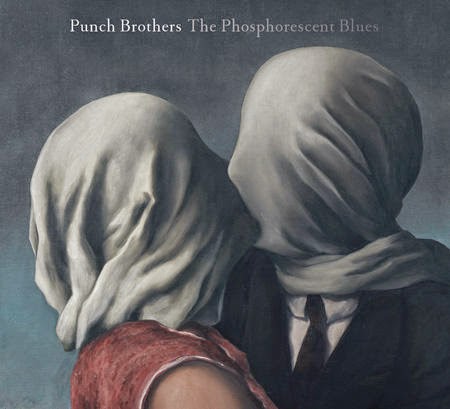
The Phosphorescent Blues - Album Review

Anyone who has spent any amount of time around me knows how much I love music. Anyone who has spent a substantial amount of time around me knows that Punch Brothers are the one group of people who I will always trust to create music that I will love. Anyone who, like me, was a little worried prior to hearing The Phosphorescent Blues (Punch Brothers’ newest album) that the band was moving in a direction far from what made so many of us fall in love with their sound, can sleep soundly tonight. Whilst there are a few tracks on the new album that aren't up to the boys’ usual standard, there is enough good to be found within The Phosphorescent Blues to call it another successful endeavour from the best progressive bluegrass has to offer.


The album opens with what appears to be somewhat of a preview of what the band is trying to achieve with The Phosphorescent Blues. The first track – Familiarity – is a ten minute long tune that has been split in two. The first half, whilst having some pretty complex instrumental lines, is very vocal focused and introduces drums for the first time in a Punch Brothers song, played by Jay Bellerose (someone who Chris Thile referred to on the band’s website as a “sixth Punch Brother”). I have to say I was incredibly sceptical of the inclusion of drums in this new album. I have always appreciated that the Punch Brothers were able to simulate the effect of drums without actually having a drummer. Fortunately, whilst the drums are a little jarring to begin with, they find their place within the group’s sound in the second half of Familiarity. Speaking of the second half, this is where we see the other element of what’s to come in TPB: the classic Punch Brothers sound you know and love. I really liked Familiarity. It sort of feels like a trailer for the rest of the album and does that job really well.

The rest of the album can be sorted into two categories: ‘pop heavy’ and ‘bluegrass heavy’. What I mean by this is that when listening to each song I imagined a set of scales. On one side was the influence of pop music and on the other was the influence of older, more folky Punch Brothers songs. All of the songs on this album have influences from both ends of the scale (the only exceptions being the Debussy and Scriabin covers which are straight arrangements for bluegrass instruments of the original pieces), but some songs have more weight on one side than the other. I had more difficulty in getting behind the more ‘pop heavy’ songs. This may be due to my broad dislike of pop music and the fact that most of these songs featured drums which still irks me a little, however, I think the main reason for my issue with the ‘pop heavy’ songs on TPB was due to the lack of esotericism, a trait that I have come to expect from Punch Brothers’ music. I think the best example of this lack of complexity is I Blew It Off. This song was the first song revealed from the new album and was the source of my concern before I listened to the entire set. It is the simplest song on the album and the most repetitive. That’s not to say that this is representative of the entire album. In fact, the album is saved by six songs that I absolutely loved.


Some of those six songs fall under the ‘bluegrass heavy’ category. Whilst these songs certainly draw from older Punch Brothers material, it is not the case that this new music is entirely in the spirit of past albums. My two favourite songs on TPB are My Oh My and Julep. These songs definitely come from progressive bluegrass beginnings and that is the predominant sound here, but they have moved somewhat towards the area of pop music. This is the direction in which I expected the Punch Brothers to take their sound and with these two songs as well as Passepied (Debussy) and Boll Weevil, they have done so successfully.

The last song I want to talk about before giving my overall verdict of The Phosphorescent Blues is Little Lights – the last song on the album. This, I feel, finds the perfect balance between bluegrass and pop. The song focuses mainly on the singing (and Chris Thile’s slightly off-putting falsetto), including some lovely, folky vocal harmonies and a collection of fan-submitted vocal clips arranged in a sort of sample choir. This focus on the vocals is not at the expense of the instrumental work. There is an enchanting violin solo that leads into, and carries on during the chorus. The melancholy tone of this song hammers home the slightly sombre mood of the entire album and closes out the set incredibly well. This is also the only track where the drums never felt out of place.

The Phosphorescent Blues is not the best Punch Brothers album, but it does have enough good in it to sustain my confidence in Thile, Critter, Pickles, Gabbers and Arco Paulo. I enjoyed a lot of the new album, but the overall direction of the music is unclear and that bothers me. To put it simply, The Phosphorescent Blues is confusing, but enjoyable and in the end… Isn't that all that matters?


7/10

Tuesday, 12 August 2014

Guardians of the Galaxy - Review


The Guardians of the Galaxy are not a well known group of characters from the Marvel universe. For this reason, many were sceptical of how successful this film could ultimately be. As someone who was incredibly excited about this film from the moment the first trailer was released, I’m happy to say that those naysayers were wrong to doubt the abilities of James Gunn and the rest of the cast and crew of Guardians of the Galaxy. This is not only my favourite Marvel film of the year, it is probably the best film they have ever made.

The Guardians looking awesome!

For those who are unfamiliar with this particular side of the Marvel universe, Guardians of the Galaxy is easiest to describe (but perhaps not most accurately) as the outer space equivalent of the Avengers. The premise of this film places Peter Quill (Chris Pratt), a space outlaw who was kidnapped from Earth as a child during the 1980s, in a situation where he must team up with four other criminals: Rocket Racoon (Bradley Cooper), Groot (Vin Diesel), Gamora (Zoe Saldana) and Drax (Dave Bautista). All of the central characters were played well by their respective actors. I’d like to mention Chris Pratt in particular who is relatively inexperienced in this kind of film. His portrayal of Peter Quill was hilarious whilst still serious when he was needed to be.

Chris Pratt as Peter Quill 

Zoe Saldana was able to be intimidating and forceful whilst still having comedic moments. Bradley Cooper and Vin Diesel were both playing fully animated characters and both did an excellent job. Particularly Cooper who’s role as Rocket was absolutely the heart of the film. A large portion of this success is down to James Gunn’s brilliant script which was able to take an inexperienced actor like Bautista and help him to deliver some of the funniest and most intense moments of the film.

Further credit must be given to Gunn for introducing an entirely new ensemble of important characters and still managing to produce a film in which none of them felt underdeveloped. There was a well measured mix of dialogue, character development and action as well as ensuring that the continuity from previous films was upheld. The action sequences were tense whilst being dotted with just the right amount of humour to uphold the film’s comedic tone. This tone was further enhanced by the brilliant soundtrack of 70s and 80s pop songs from Quill’s childhood. These songs never felt out of place and at many points in the film, really improved the experience.

My only real gripes with Guardians of the Galaxy came from its villains. The villain to whom the film paid the most attention was Ronan the Accuser (Lee Pace). This was the only character in the film that seemed underdeveloped. He was presented as a religious fanatic with a great many anger issues, but he never felt scary or all that intimidating. Fortunately, the villain to whom he answered – Thanos (Josh Brolin) - was far scarier and never felt underused, despite him only being in one scene.


Lee Pace as Ronan
This film excites me for two reasons: Firstly, it opens up the Marvel Cinematic Universe to a whole new side of the universe in the comics. Secondly, it shows that as long as they maintain this level of quality, Marvel no longer has to be afraid of using less well known characters as the subject of their films. Guardians of the Galaxy was so enjoyable that it makes me nervous about any future films Marvel can make. This reaction is similar to the one I had after seeing The Avengers; can anything be as good as this?


9.4/10

Wednesday, 25 June 2014

The Fault in Our Stars - Review


The Fault in Our Stars is a film, based on a book by John Green about two teenagers with cancer. If you’ve seen the trailers, you probably think this film is just a teen romance film, and, if you read the book, you would be proven wrong. The film however, is not much more. The Fault in Our Stars for me was your average teen romance film, bookended by tragedy.

I loved the book by John Green. However, I had a few minute problems with it. Unfortunately, these problems were amplified upon their arrival to the big screen. The most prevalent issue was the characterisation of the film’s two main characters, Hazel and Gus. Neither character felt as if they had their own individual voices, instead, they both seemed to be vessels for John Green to be existential. The film deals with some very interesting ideas through Hazel and Gus’ conversations, but for the most part, these discussions feel like one person having a deep, meaningful chat with them self. This really took me out of the experience and removed a great deal of the emotion from the film.

Hazel and Gus

Another major problem with the Fault in our Stars is the lack of decent actors. Aside from the fantastic performances from Shailene Woodley (Hazel), Nat Wolff (Isaac) and Willem Dafoe (Peter Van Houten), the majority of the acting in the film was either bland or over the top. The most disappointing of these performances was that of Ansel Elgort as Gus. Whilst in the book this character is immediately likeable and funny, Elgort’s portrayal was rather pretentious. This made potentially charming scenes annoying and, in some cases, pretty creepy. Thankfully, Woodley’s acting ability was able to partially rectify the situation. Since Woodley played a likeable and sympathetic Hazel, it was easier to share her affection for Gus, despite his lack of charm.

The presentation of the film was also quite unpleasant. The opening scene felt out of place at the beginning of a high profile film such as this. The scene was a quick montage of some of the happier moments that would follow in the story, accompanied by music very similar to that in the trailer. Usually, montages at the beginning of films are pretty enjoyable, but due to the footage they used for it, it felt like a trailer. Furthermore, the majority of the music used in the soundtrack felt like an afterthought. The soundtrack was comprised of songs that did not fit the scenes they were accompanying and often cheapened them.


This is not to say that the film was all bad. The plot remained faithful to the book meaning that it was well thought out and full of moments that will probably make you laugh, and will most certainly make you cry. The final segment of the film is particularly heart wrenching and is probably the most enjoyable. Unfortunately, in order to get to it, you have to sit through a lot of cringe worthy and boring scenes. There is something to be said for the atmosphere in a room full of people when watching The Fault in Our Stars. When everyone around you is crying at the same time and for the same reasons, the experience is definitely enhanced.

Ultimately, The Fault in Our Stars is a great story with bad presentation that is unquestionably a better experience when read. If you are determined to see this film, make sure that you are in a room full of people when you do.


5.8/10

Friday, 23 May 2014

X-Men: Days of Future Past - Review


X-Men: Days of Future Past is the sequel to 2011’s X-Men: First Class as well as being Bryan Singers first film back after X2 and the first film that truly links all of the X-Men films we have seen so far together (except X-Men Origins: Wolverine which I think we can all agree will not be missed). Days of Future Past rights the wrongs of past films and sets up the rest of the series excellently whilst generating new problems of its own.


Days of Future Past’s story is a little complicated due to the inclusion of a rather strange form of time travel (more on that later). If you’re the kind of person who doesn’t like to pay very close attention whilst watching a film, you might want to make an exception for this one. The film is split between two time periods each with its own cast of actors. The majority of the time is spent in 1973 and follows the cast of X-Men: First Class; the rest of the time is spent in the not too distant future and follows the cast of the original X-men trilogy. Overall, I enjoyed the main plot of the film despite its complicated nature, and whilst I felt that a few casting choices weren’t so great, the acting was of a pretty high standard too.

The main focus of the film was on the young Charles Xavier trying to find a “better path” as the film put it. James McAvoy’s performance as Xavier was perhaps the strongest in the film. His tale of regaining his former self and righting his wrongs in order to become the Xavier as portrayed by Patrick Stewart was enduring and often quite emotional. This is an area that the X-Men series succeeds in where other superhero franchises fail; it tells compelling human stories, that other films (… Man of Steel) neglect in return for extra long action sequences that often detract from the overall experience.
(Left to right) Beast, Professor X, Wolverine
The other central roles in Days of Future Past are Magneto (Michael Fassbender), Wolverine (Hugh Jackman) and Mystique (Jennifer Lawrence), with some being more successful than others. Fassbender does an excellent job of channelling a younger version of Ian McKellen, especially in the way that he speaks as well as in the way he portrays the character. This is an improvement on his performance in First Class in which Magneto didn’t seem all that much more than a really angry guy. As usual, Hugh Jackman plays a great Wolverine. It really seems at this point that there isn’t anyone else who can play the character as Jackman has been doing a consistently good job for the last fourteen years. As the only character that interacts with both casts in the film, it’s nice to see that he reacts as Wolverine would in both situations.

Jennifer Lawrence also plays an important role in the film as Mystique. I liked the direction the writers went with her character in the film, but I didn’t feel that Lawrence really fit in with that direction nor did she seem comfortable during action sequences (perhaps Mystique’s lack of clothing was responsible for this). Peter Dinklage plays Bolivar Trask, creator of the mutant hunting robots – the sentinels. As expected Dinklage played Trask very well, however, he wasn’t given enough screen time to be a particularly memorable villain, which I felt was rather a waste of his talent as an actor. Evan Peters’ Quicksilver had a similar problem. His scenes were among the most enjoyable in the film; the issue was that there were only three of them. I’m glad they included these scenes as I often found myself laughing aloud when Quicksilver was on screen. Perhaps they could have exchanged some of Beast’s screen time for more Quicksilver as I felt that Nicholas Hoult’s Beast was a little unnecessary and only served the purpose of keeping Xavier company and inventing convenient bits of tech to advance the plot.

The scenes in the future contained most of the film’s action sequences (though the 1973 bits had their fare share) all of which were incredibly satisfying and did a good job of showcasing the powers of the mutants. Whilst none of these characters had much of a presence within the story - aside from Stewart’s Xavier, McKellen’s Magneto and Kitty Pride (Ellen Page) – they were a welcome addition and provided nostalgia and some enjoyable scenes.

Old and new young guys
Singer took this opportunity to repair the broken continuity of Fox’s X-Men­ cinematic universe as well as set up for future films. The ending of the film left things at a point where the series can go quite a few different ways which on one hand I like because it means that the plot of future films and their subsequent twists will be a surprise. However it leaves the series in a position where new films will either have to be super complicated / long in order to accommodate multiple story lines, or they’ll just release a lot more films which seems more likely.

X-Men: Days of Future Past is a successful launch pad for Fox’s new cinematic universe whilst still managing to be a very enjoyable film in its own right. Despite its few minor problems Days of Future Past is well worth watching and leaves me very excited for X-Men: Apocalypse in 2016.

8.8/10

Tuesday, 13 May 2014

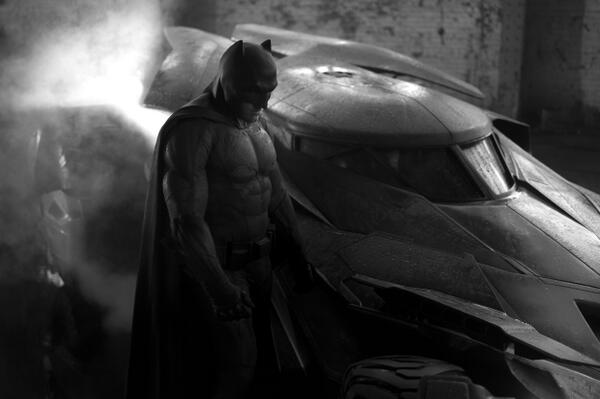
First look at Batman and the Batmobile from Batman Vs Superman

The first image of what we assume to be the new Batsuit and Batmobile from the Man of Steel sequel has been tweeted by director Zack Snyder today.


Embedded image permalink
I'm concerned that Batman has a neck issue


The Batmobile doesn't seem all that different to the one featured in the Dark Knight trilogy. The main interest for me is the Batsuit, which looks rather similar to the suit from Frank Miller's The Dark Knight Returns.

Frank Miller's Batman

These similarities would make sense as Batman Vs Superman has so far shown to have taken a lot of its inspiration from the iconic Batman storyline.

Snyder has not released any further details about the film but it seems quite likely that the Wonder Woman suit will be revealed soon as well.


Wednesday, 23 April 2014

The Amazing Spider-Man 2 - Review

While many thought that the first Amazing Spider-Man film was unnecessary and perhaps came too soon after the original Spider-Man trilogy, I felt that it was the best way to reintroduce the ‘wise-cracking web-slinger’ onto the big screen. It was a fantastic film that sewed the seeds for many more great movies to follow.

The Amazing Spider-Man 2 is one of those films. While not as enjoyable as its predecessor, this sequel is still a mostly successful continuation of Peter Parker’s story as New York’s most loved superhero. It’s important to mention that the overall plot of the film is still, at its heart, a love story and that the other plot elements slot in around it. This is the area in which The Amazing Spider-Man 2 finds most of its success. Andrew Garfield and Emma Stone reprise their roles excellently as Peter Parker and Gwen Stacy. Their scenes together are by far, the most enjoyable parts of the film. The two actors have great chemistry, and there are a couple of scenes where I felt as if I was intruding on an intimate moment between two real people. This is the sort of thing that Marc Webb does really well as a director.

Mark Webb at his best.

This is still a Spider-Man film though, which means two things: action scenes and super-villains. The former is done very well. The action in the film is engaging and exciting. Since the villains in Spider-Man’s rogues gallery are colourful and possess crazy super powers, there are quite a few action sequences in the film that require a lot of CGI, so don’t be disappointed when you are greeted by a rather obviously computer animated Spider-Man on multiple occasions. The latter on the other hand, is not done as well. While Dane DeHaan makes for a fantastically creepy Green Goblin (helped by really good costume design), Jamie Foxx’s Electro is forgettable. From the beginning of the film, his character is emphasized as sympathetic. However, he never comes across this way. This is in no way the fault of Foxx. It shows that the writers did not have a particularly good understanding of the character which is a shame.

Goblin looking creepy!

The other area in which the film falls a little flat is in the way it handles Peter’s parents’ story. The story is set up really well in the opening of the film. It gives a sense of intrigue that makes the viewer more than a little curious. The resolution of this plotline however is not done well. The way the writers handled it made the story feel like an afterthought despite how much they tried to stress its importance.

Thankfully the presentation of The Amazing Spider-Man 2 is just as good, if not better than that of the first film. The soundtrack, by Hans Zimmer and Pharrell Williams’ “supergroup” was enjoyable and accompanied the film well. I especially enjoyed ‘Paranoia’, the Electro theme. Listening to it gives you the same creepy feeling you get from watching Dane DeHaan’s performance.

The Amazing Spider-Man two is an enjoyable follow up to 2012’s Spider-Man reboot. Whilst it does fall flat in a few places, the film is a great action movie and love story with an ending that elicited a sincere emotional response from its audience and still manages to provide a setup for the upcoming third film and Sinister Six spinoff.


7.9/10

Monday, 7 April 2014

Captain America: The Winter Soldier - Review

I’ll admit I didn't like Captain America: the First Avenger very much at all. That film really put me off Steve Rogers as a character. Even The Avengers didn't help, despite how fantastic that film was. This meant that by the time the trailer for Winter Soldier was released, I had just about given up on Cap. And then I watched the trailer…

The second Captain America film is fantastic. It focuses on a far more interesting aspect of the character which allows the film to go to some much more dark and surprising places. Winter Soldier is first and foremost a political thriller. It has an incredibly well developed plot with plenty of twists, turns and paranoia without forgetting that it is still a Marvel movie with certain elements that it needs to include. I’d rather not go into the specifics of the plot as nearly every moment in the film is important and if you haven’t seen the film yet I could run the risk of ruining it. To put it vaguely, the film deals with Cap’s struggles with being a S.H.I.E.L.D. operative and following orders post – Avengers.

The acting in Winter Soldier is phenomenal. Of course, Chris Evans returns as Steve Rogers and does a good job. The stars of the show however, are Scarlett Johansson as Black Widow and Samuel L. Jackson as Nick Fury. The character development for the two of them in the film is significant and complex. This makes their jobs as actors all the more difficult, which in turn makes their excellent performances even more impressive. Unfortunately, the same cannot be said for Evans. The film doesn't do all that much to develop his character which rather limits the quality of Evans’ portrayal of the Captain. Thankfully, even though Captain America is very much the central character in the film, he is not its main focus. The film introduces some new and exciting characters whilst also bringing back some old ones from the first film and the Avengers. Among the new faces is Anthony Mackie as Sam Wilson/The Falcon. Mackie plays a similar role to James Rhodes in the Iron Man films in the sense that he is Cap’s wing-man (literally) and is there to provide witty dialogue as well as some really epic action set pieces. Whilst his role is not huge in this film, I would keep an eye out for him in Avengers: Age of Ultron next summer. Another new character is Alexander Pierce played by Robert Redford. Redford brings experience from 70s political thrillers and really shows that Marvel were serious about the tone and themes of this film.

Anthony Mackie as Falcon.

What really helped Captain America this time around, was the spectacle of the film. It showcased the creative team at Marvel’s true intentions for the character, as for once, Captain America felt like a legitimate superhero with legitimate powers. The abilities that come with the super soldier serum are shown to be devastatingly powerful whilst at the same time being precise and efficient. The shield as well is successfully presented as an effective and impressive weapon. This boosted my confidence in Cap as a superhero and as a character in general. This new take on Cap’s abilities played in well with the film’s astoundingly cool action scenes, the most impressive of which being those that saw Cap engaged in close quarters combat with the films villain – the faceless Winter Soldier after whom the film is titled. The choreography for these scenes is very impressive.
Cap vs Winter Soldier
I had very few problems with Captain America: The Winter Soldier. Unfortunately, there were a couple. Chief among them being the lack of character development for Cap. The other big issue was the importance of having already seen the first film prior to watching the fantastic sequel. Captain America: the First Avenger was not a great film and because of this, not that many people will have seen it. This creates a problem when many of Winter Soldier’s biggest plot points stem from the events of the first film. So, if you do intend on going to see the film, I recommend that you first watch The First Avenger.


Captain America: the Winter Soldier is amazing. It is definitely the best phase two Marvel movie by a long shot. This is a film full to the brim with a gripping plot, witty dialogue, engrossing actions scenes and throws in a plot twist that is going to have a huge effect on Avengers two and phase three. I honestly can’t think of a single reason to not go and see this film.

9.2/10

Sunday, 24 November 2013

My Doctor Who Christmas Special and Twelfth Doctor Whishlist

Having just seen the Day of the Doctor, we are now without doctor who for about a month, and following that, several more. With all this spare time and anticipation to both Matt Smith's final episode and Peter Capaldi's debut as Twelve, I decided to come up with a few things that I want to see in the Christmas special and next series.

1. Mark Gatiss to write Matt Smith's final farewell and to take over as head writer for the next series- Despite Stephen Moffat being the head writer and the inevitability of him writing the Christmas special, I really do think that Gatiss is the superior writer and that he deals with the more emotional side of the Doctor far better. Not to mention that he is an actor himself and is therefore more likely to write a more convincing Doctor in Eleven's final moments.

2. Clara to stay on as the Doctor's companion after he regenerates - I'm not a big Clara fan. However, I do feel that it's important for a new Doctor to come into our lives with something familiar coming with him. I also feel that both the Doctor and his companions benefit from staying with each other after his regeneration because, in the past it has generally been the case that companions grow closer after seeing something as personal as a regeneration. I never particularly liked Rose as a character either, but I feel that after Nine regenerated into Ten, her relationship with the Doctor was much more interesting to watch.

3. Capaldi's Doctor to act like a grumpy old man - I was particularly excited when the BBC announced that Peter Capaldi would be playing the twelfth Doctor. I loved his performance as Malcolm Tucker in The Thick of It and In the Loop and that particular character was a very grumpy (and potty mouthed) Scotsman. I think that a grumpy, no nonsense Doctor would be so much fun to watch and would contrast excellently with Matt Smith's rather silly (but outstanding) performance.

So there you have it, my hopes and dreams for the near future of Doctor who. Happy anniversary, and here's to another 50 years!

Saturday, 23 November 2013

Day of the Doctor - Review

Wow! Just wow!  As much as I have complained about Stephen Moffat in the past, one thing must be said in his defence: he certainly knows how to put on a show.

Day of the Doctor is a special episode of Doctor Who to celebrate the show’s 50th anniversary. As an enormous fan of the series, I and all of my friends have been anticipating this episode since the first trailer was shown in July. I’m not going to bother warning you about spoilers in this review, because if you haven’t yet seen the episode and are reading this review first, I seriously doubt your sanity.

Before I talk about the many things I loved about Day of the Doctor, I’m going to have to wade through the sizable puddle of faults that the episode had.
Firstly, the plot of the episode was extraordinarily weak. Aside from all the exciting time war and past Doctor awesomeness, there was still around 45 minutes of boring zygon invasion storyline to sit through. As much as I love the zygons as monsters, I think that this was the wrong time to bring them back. Their only purpose was to facilitate a rather pretentious plot point about Gallifreyan art. Furthermore, the inclusion of Queen Elizabeth I was irritating and totally unnecessary. I’m sure Moffat could have come up with a much less annoying way of bringing the three Doctors together without reinforcing the illusion the David Tennant’s Doctor is only there to get the girls.

There were a few things that I was relieved about though. Firstly, I’m glad that they didn’t actually bring Rose back as Rose. As popular as she is, I never really liked Rose’s character and her eventual romantic relationship with the Doctor’s half human clone, and I think that bringing her back would have brought with her some unwanted baggage. I’m also relieved that Moffat didn’t completely change the show’s mythology as many of us were expecting (and dreading). I think that the way the Time Lords were saved was in excellent taste, as well as making Doctors 10 and War forget about the events of the episode, as having them remember would have been confusing and annoying in the long run.

This next paragraph concerns all the things that caused me to physically ‘nerd out’ on the sofa, so, what follows may be a little erratic and perhaps slightly confusing…

First of all, John Hurt’s performance as the War Doctor was enchanting. He was every bit as dramatic and mysterious as we’d hoped. Not only that, but he was also charming and funny and as curious as the Doctor should be. Secondly, the interactions between the three of them were fantastic. I loved how judgemental Tennant was of Smith and his characteristics. The best parts of the episode however, were all the bits of fan service that were thrown. There were perhaps too many to talk about all of them in one review so I will list my top five (in no particular order):

  1. Tom Baker as the ‘Great Curator’.
  2. Tennant’s TARDIS transforming into the current one.
  3. 13 TARDISs!!!!!
  4. The War Doctor’s Regeneration.
  5. An appearance from Peter Capaldi as the 12th Doctor.

I thoroughly enjoyed the Day of the Doctor, but not because of its story. It was a fun adventure with plenty of fan service and excitement along the way.

Scores:

Story – 5/10

Fan Service ∞/10

Time Lord Children Saved – 2.47 Billion

The Hunger Games: Catching Fire - Review

WARNING – MILD SPOILERS!

If I’m being completely honest, I wasn’t planning on going to see Catching Fire. I thought that the book, whilst having a good premise, was not written at all well. I had mixed feelings about the film adaptation of the first book, and was rather apathetic and not at all confident that Catching Fire would be any good, especially since they had to change directors from the first film. However, when my friends asked me to go and see the film with them, I decided that it couldn’t be that bad and went along with them.

I’m so glad that I did. The Hunger Games: Catching Fire was phenomenal. The new director brought so many improvements over the last film, not least the removal of shaky cam. One of my biggest gripes about the first film was the over use of shaky cam during action sequences to the point where it was hard to make out what was going on. To my relief, the use of this technique was practically non existent in the action scenes, which made the actual ‘hunger games’ section of the film so much more enjoyable.

The other element of the film which I think was handled better was the world outside of the games. Not only was this done better than in the previous film, but it was much more enjoyable than that part of the book. At the end of the first film, main characters; Katniss and Peeta, attempted to kill themselves rather than kill each other in the arena. But, rather than allowing them to do so, the game makers let them both live and have two victors. Unbeknownst to Katniss, her act of rebellion was seen by the other districts as a sign that they could rebel against the Capitol and win. The first part of the film deals with the aftermath of the first games and the methods the Capitol uses to quash the rebellion, much to the horror of Katniss and Peeta. This sequence is handled incredibly well in the sense that it was so much more emotionally involving and it really made me feel sorry for those who died or were punished for speaking out.

The film looks incredible too. The costume and set design looks exactly how you would expect it to from the way things are described in the book, and the CGI was impeccable. I especially enjoyed the design of the new arena. I won’t give away the secrets of the arena that made it so enjoyable, but I will say that it was really interesting and the many horrible things that the tributes have to go through inside it are very clever and serve not only to provide fun action scenes, but also to advance the story.

The games themselves take up the bulk of the film, and whilst I enjoyed the world building elements in the first half, the games are going to be the parts I will remember when I think about the film. As previously said, the arena was fascinating and the action was very exciting. I especially enjoyed the combat between tributes in this film since all of them were winners of previous Hunger Games. And the new characters that were introduced into the arena were far more memorable and fun to watch than those in the first film.

The Hunger Games: Catching Fire was amazing. In fact, I think it might be my favourite film of 2013, only perhaps coming second to Iron Man 3. The Hunger Games is one of very few franchises that actually improve, not only from the first film to the second, but also from book to film, and I’m very much looking forward to the two part final chapter of this series.


9/10